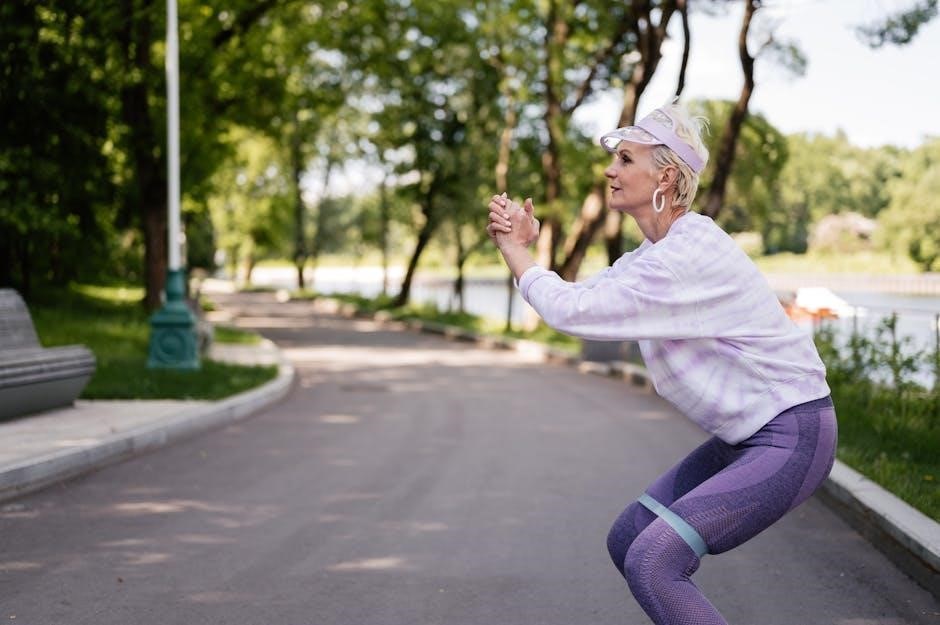
Resistance band exercises offer a safe and effective way for seniors to maintain strength, improve mobility, and enhance overall well-being, promoting independence.
Table of Contents
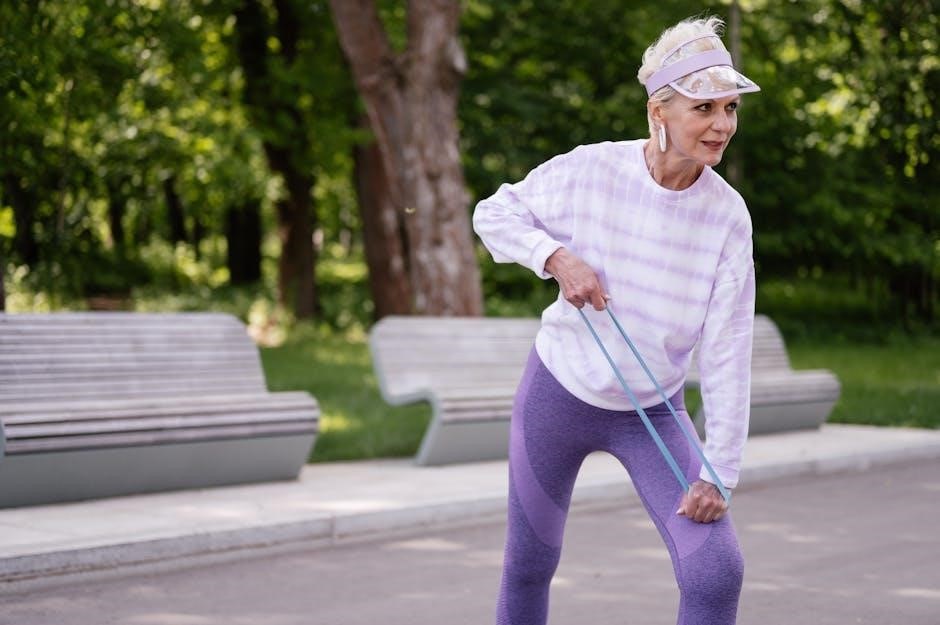
, outlining the benefits and safety considerations. Section 1 delves into Resistance Band Workouts, defining bands, their advantages, selection guidance, and crucial usage tips.
Section 2 focuses on preparation with Warm-Ups and Stretches, covering activities, common errors, and detailed routines. Section 3 provides general Workout Guidelines. Finally, Section 4 presents targeted Exercises for Seniors, categorized by muscle group – Upper Body, Lower Body, Abdominal, Chest, Shoulder, Back, Thigh, Glute & Hip Flexor, and Calf – ensuring a comprehensive fitness approach.
Resistance bands are versatile tools providing adjustable tension, making them ideal for seniors seeking low-impact strength training and improved functional fitness.
Resistance Bands Defined
Resistance bands are elastic bands of varying resistance levels, used to challenge muscles during exercise. Unlike traditional weights, they provide progressive resistance – meaning the tension increases as the band is stretched. They are typically made from latex or rubber and come in different forms, including loop bands, tube bands with handles, and figure-eight bands.
These bands are portable, affordable, and incredibly versatile, making them a fantastic option for seniors looking to incorporate strength training into their routines. They’re excellent for rehabilitation, improving range of motion, and building strength without putting excessive stress on joints. The varying resistance allows for customized workouts, catering to individual fitness levels and goals. They are a safe and effective alternative to heavier weights.
Benefits of Using Resistance Bands
Resistance bands offer a multitude of benefits specifically for seniors. They improve muscle strength and endurance, crucial for maintaining independence in daily activities like walking, lifting, and climbing stairs. Bands enhance flexibility and range of motion, reducing stiffness and improving joint health.
They are low-impact, minimizing stress on joints, making them ideal for individuals with arthritis or other joint conditions. Bands promote better posture and balance, reducing the risk of falls. Their portability allows for exercise anywhere, anytime. Furthermore, resistance bands are cost-effective and easy to use, making strength training accessible to everyone. They contribute to improved cardiovascular health and overall quality of life.
How To Choose a Suitable Band
Selecting the right resistance band is crucial for safety and effectiveness. Bands come in varying resistance levels, typically color-coded – lighter colors offer less resistance, while darker colors provide more. Seniors should start with lighter resistance bands and gradually increase as strength improves.

Consider the band’s material; latex bands are common but may cause allergies. Non-latex alternatives are available. Look for bands with comfortable grips or handles. A set with multiple resistance levels is ideal for progressive training. Ensure the band is durable and free from tears or defects. Prioritize quality over price to ensure longevity and safety. Consulting a physical therapist can help determine the appropriate resistance level for individual needs.
Safe Usage: Resistance Band Usage Tips
Prioritize safety when using resistance bands. Always inspect bands for cracks or tears before each use, discarding damaged ones immediately. Secure the band properly, avoiding snapping or uncontrolled movements. Maintain a slow, controlled pace throughout each exercise, focusing on proper form.
Avoid overstretching the band, as this can lead to injury. Anchor the band securely to a stable object. Breathe consistently during exercises – exhale during exertion. Stop immediately if you experience any pain. Start with fewer repetitions and gradually increase as strength improves. Consider working with a physical therapist or qualified trainer for guidance, especially when starting.
Section 2: Warm-Ups and Stretches
Preparing the body with gentle warm-ups and stretches is crucial before resistance band training, enhancing flexibility and minimizing injury risk for seniors.
Warm-Up Activities
Before initiating resistance band exercises, a proper warm-up is paramount for seniors. Begin with 5-10 minutes of low-impact cardiovascular activity, such as marching in place or gentle arm circles. These movements increase blood flow to the muscles, preparing them for exertion.
Next, incorporate dynamic stretches like leg swings (holding onto a chair for balance), torso twists, and shoulder rotations. These movements improve range of motion and flexibility. Focus on movements that mimic the exercises you’ll be performing with the bands.
Light band exercises, using the lowest resistance level, can also serve as a warm-up. For example, gentle bicep curls or lateral raises with a very light band prepare the muscles specifically for the workout. Remember to prioritize controlled movements and listen to your body, stopping if you feel any pain.
Common Warming-Up Mistakes
Many seniors inadvertently compromise their workout’s effectiveness – and safety – by making common warm-up errors. Skipping the warm-up entirely is a significant mistake, leaving muscles cold and vulnerable to strain. Rushing through the warm-up, performing ballistic (bouncing) stretches, and neglecting to focus on the muscle groups targeted in the workout are also detrimental.
Overstretching during the warm-up can reduce muscle power and increase injury risk. Ignoring pain signals is another critical error; discomfort indicates a need to modify or stop the movement. Failing to adequately warm up joints, particularly shoulders and hips, limits range of motion.
Finally, not gradually increasing intensity during the warm-up can shock the system. A gentle, progressive approach is key for preparing the body for resistance band exercises.
The Warm-Up Routines
A successful warm-up for seniors using resistance bands should last 5-10 minutes, focusing on gentle movements and increased blood flow. Begin with 2-3 minutes of light cardio, like marching in place or arm circles. Follow this with dynamic stretches, holding each for 1-2 seconds and repeating 10-15 times.
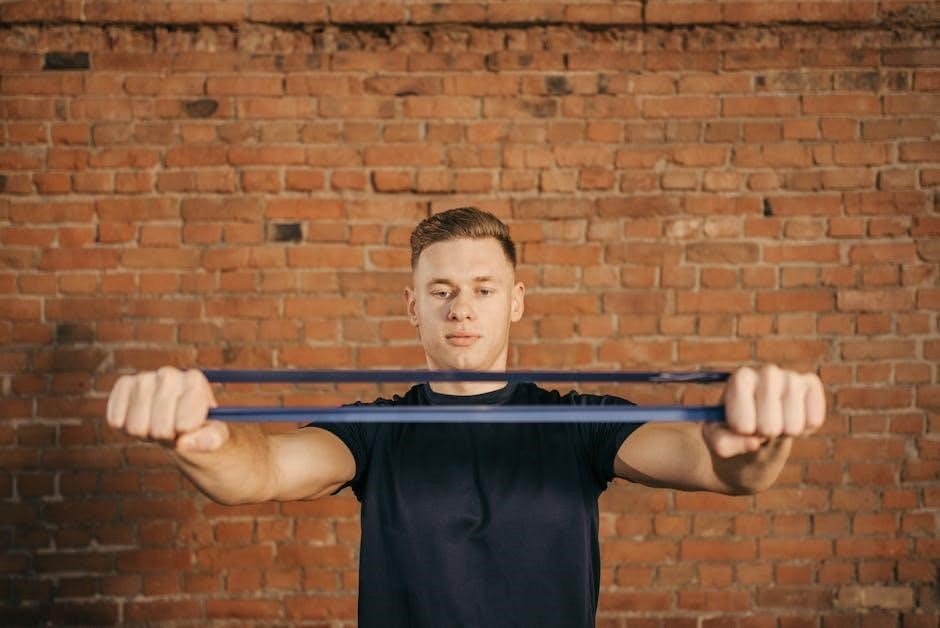
Include arm swings, leg swings (holding onto a chair for balance), torso twists, and ankle/wrist rotations. Incorporate band-assisted movements with very light resistance – band pulls, gentle rows, and leg extensions. Focus on controlled motions, emphasizing proper form over speed.
Gradually increase the range of motion with each repetition. This prepares muscles and joints for the more strenuous exercises to follow, minimizing injury risk and maximizing workout benefits.
Stretching Routines
Post-workout stretching is crucial for seniors to improve flexibility, reduce muscle soreness, and enhance recovery. Hold each stretch for 20-30 seconds, breathing deeply throughout. Focus on major muscle groups worked during the resistance band exercises.
Include stretches like hamstring stretches (seated or standing), calf stretches (leaning against a wall), shoulder stretches (across the body), and triceps stretches. Gentle torso twists and hip flexor stretches are also beneficial. Avoid bouncing or forcing the stretch; aim for a comfortable tension.
Utilize the resistance band itself for assisted stretches, gently pulling limbs into a deeper stretch. Remember to stretch both sides of the body equally, maintaining proper posture and balance.
Section 3: Resistance Band Workout Guidelines
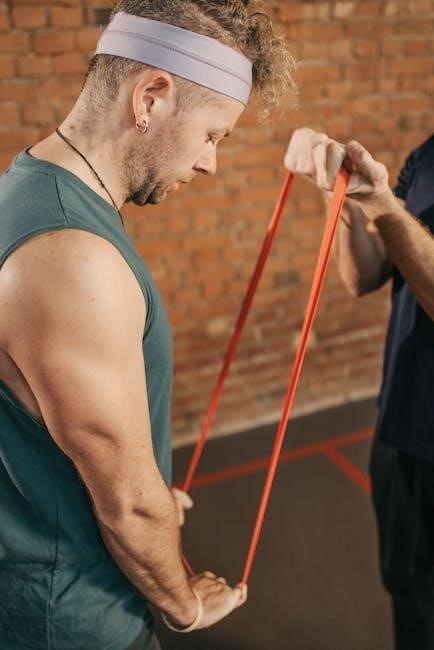
Prioritize proper form over resistance level. Seniors should begin with lighter bands and gradually increase resistance as strength improves. Aim for 10-15 repetitions per exercise, completing 2-3 sets with rest periods of 60-90 seconds between sets.
Focus on controlled movements, avoiding jerky or rushed motions. Engage core muscles throughout each exercise to maintain stability and protect the spine. Listen to your body and stop if you experience any pain. Consistency is key – aim for 2-3 workouts per week, allowing for adequate rest and recovery.
Remember to breathe consistently during each exercise, exhaling during the exertion phase. Adjust band length to modify resistance, and consider using anchor points for added stability.

Section 4: Resistance Band Workout Exercises For Seniors
This section details a variety of exercises targeting major muscle groups, designed to improve strength, balance, and functional fitness for seniors.
Upper Body Exercises

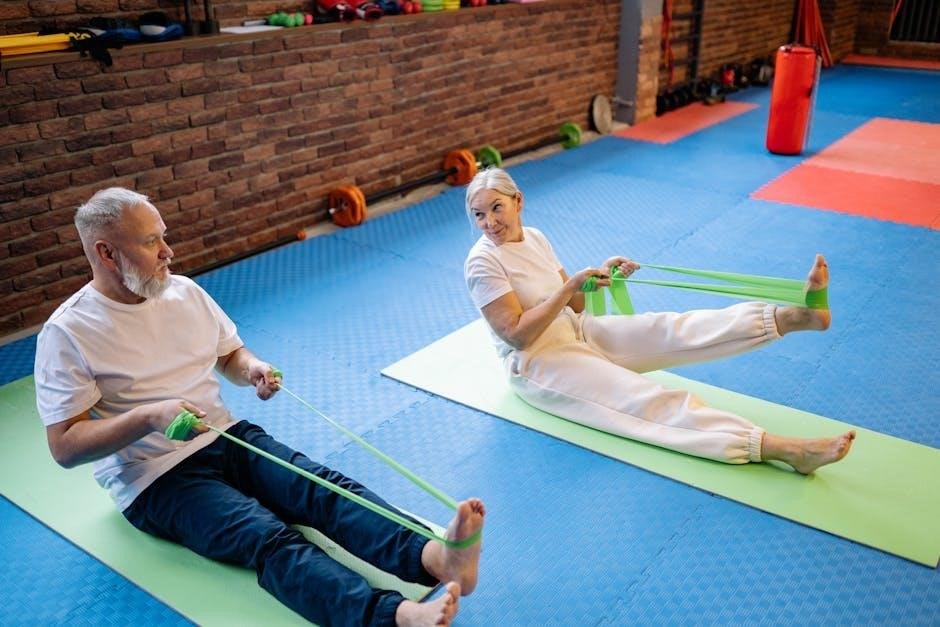
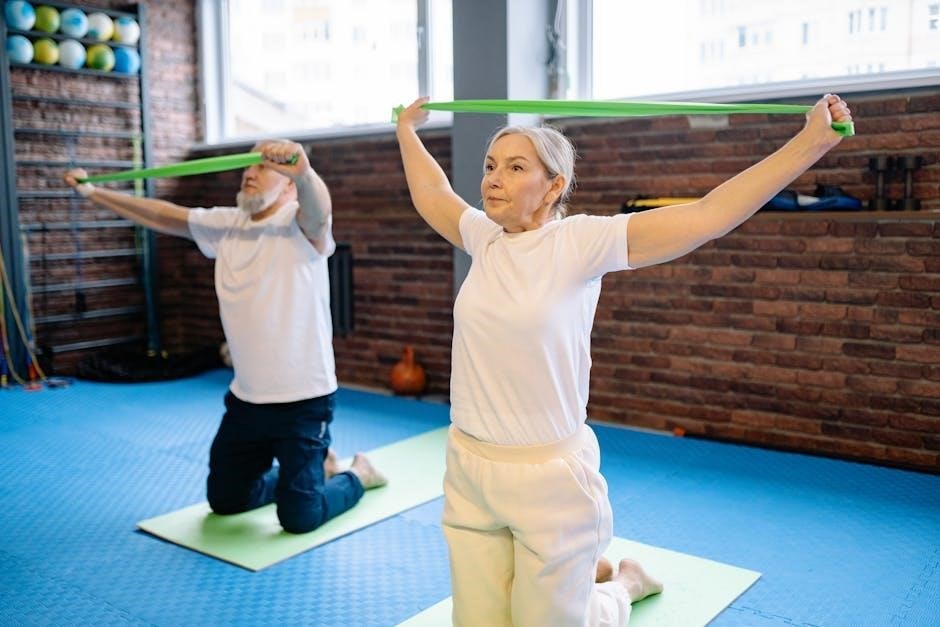
Strengthening the upper body is crucial for everyday tasks like reaching, lifting, and maintaining good posture. Resistance band exercises provide a gentle yet effective way for seniors to build this strength. Begin with Bicep Curls: secure the band under your feet, hold the ends, and curl upwards. Next, try Tricep Extensions, anchoring the band overhead and extending your arms. Band Rows, performed by sitting with legs extended and pulling the band towards your torso, target the back muscles.

Shoulder Presses, done by stepping on the band and pressing upwards, improve shoulder strength. Remember to maintain controlled movements and proper form throughout each exercise. Start with lighter resistance and gradually increase as strength improves. These exercises enhance functional capacity and contribute to a higher quality of life.
Lower Body Exercises
Maintaining lower body strength is vital for mobility, balance, and preventing falls. Resistance bands offer a safe and adaptable way for seniors to achieve this. Squats with Band, placing the band above the knees, engage the glutes and thighs. Standing Leg Extensions, securing the band to a stable object and extending the leg, target the quadriceps. Hamstring Curls, attaching the band to the ankle and curling the leg, strengthen the hamstrings.
Lateral Walks, with the band around the ankles, improve hip stability. Calf Raises, using the band for added resistance, enhance calf strength. Focus on controlled movements and proper form. Begin with lighter bands and gradually increase resistance as strength improves, promoting independence and a reduced risk of injury.
Abdominal Exercises
Strengthening core muscles is crucial for balance, posture, and everyday activities. Resistance bands provide gentle yet effective resistance for seniors. Band-Resisted Crunches, lying on your back with the band anchored under your feet and pulling up, engage the upper abs. Wood Chops, anchoring the band to the side and rotating your torso, work the obliques. Pallof Press, holding the band and pressing it straight out, improves core stability.
Seated Twists, with the band around your feet, enhance rotational strength. Remember to maintain a controlled pace and focus on proper form to avoid strain. Start with lighter resistance and gradually increase it as your core strength improves, promoting better posture and reduced back pain.
Chest Exercises
Strengthening chest muscles aids in pushing movements, like getting up from a chair. Band Chest Press, anchoring the band behind you and pressing forward, mimics a dumbbell press. Ensure a controlled motion and maintain good posture. Band Flyes, with the band anchored to the side, open your arms, focusing on squeezing the chest muscles together. Chest Push-Ups with Band Assistance, looping the band across your back and under your hands, provides support for modified push-ups.
Begin with lighter bands and gradually increase resistance as strength improves. Proper form is vital to prevent shoulder strain; keep your elbows slightly bent and avoid locking them. These exercises enhance upper body strength for daily tasks.
Shoulder Exercises
Strong shoulders are crucial for reaching, lifting, and maintaining good posture. Band Pull-Aparts, holding the band with straight arms and pulling it apart, work the rear deltoids and improve posture. Lateral Raises, stepping on the band and lifting arms to the side, target the middle deltoids. Front Raises, similar to lateral raises but lifting arms forward, work the front deltoids. Shoulder Press, anchoring the band under your feet and pressing upwards, mimics a dumbbell shoulder press.
Focus on slow, controlled movements and avoid shrugging your shoulders. Start with lighter resistance and gradually increase it as you gain strength. These exercises improve shoulder mobility and function.
Back Exercises
Strengthening the back is vital for posture, balance, and preventing injuries. Seated Rows, anchoring the band around your feet and pulling towards your torso, work the upper and middle back muscles. Band Lat Pulldowns, securing the band overhead and pulling down, simulate a lat pulldown machine. Back Extensions, lying prone and securing the band, help strengthen the lower back. Scapular Squeezes, holding the band and squeezing shoulder blades together, improve posture.
Maintain a straight back throughout each exercise and focus on controlled movements. Begin with lighter bands and increase resistance gradually. These exercises enhance back strength and stability.
Thigh Exercises
Strengthening thighs improves mobility for daily activities like walking and stair climbing. Seated Leg Extensions, anchoring the band around the ankles and extending the legs, target the quadriceps. Hamstring Curls, attaching the band to a stable object and curling the heel towards the glutes, work the hamstrings. Side Leg Raises, with the band around the ankles, strengthen the outer thighs. Standing Leg Extensions, securing the band to a chair and extending the leg, provide added resistance.
Focus on controlled movements and maintain proper form to avoid strain. Start with lighter resistance and gradually increase it as strength improves.
Glute and Hip Flexor Exercises
Strengthening glutes and hip flexors enhances balance and stability, reducing fall risk. Glute Bridges, with the band around the thighs, involve lifting the hips off the floor while squeezing the glutes. Hip Abductions, lying on your side with the band around your ankles, open and close your legs. Clamshells, also lying on your side, keep feet together and lift the top knee, engaging the glutes. Standing Hip Flexion, securing the band to a stable object and lifting the knee, targets hip flexors.
Maintain core engagement throughout each exercise for optimal results and safety.
Calf Exercises
Strong calves are crucial for walking and maintaining balance. Seated Calf Raises, with the band looped under the feet and around the thighs, involve lifting the heels off the floor while seated. Standing Calf Raises, stepping on the band with one or both feet and raising up onto the toes, provide a more challenging variation. Ensure a controlled movement, focusing on the calf muscles contracting and extending.
Proper form is essential to avoid strain; keep your back straight and core engaged. Start with lighter resistance and gradually increase as strength improves.